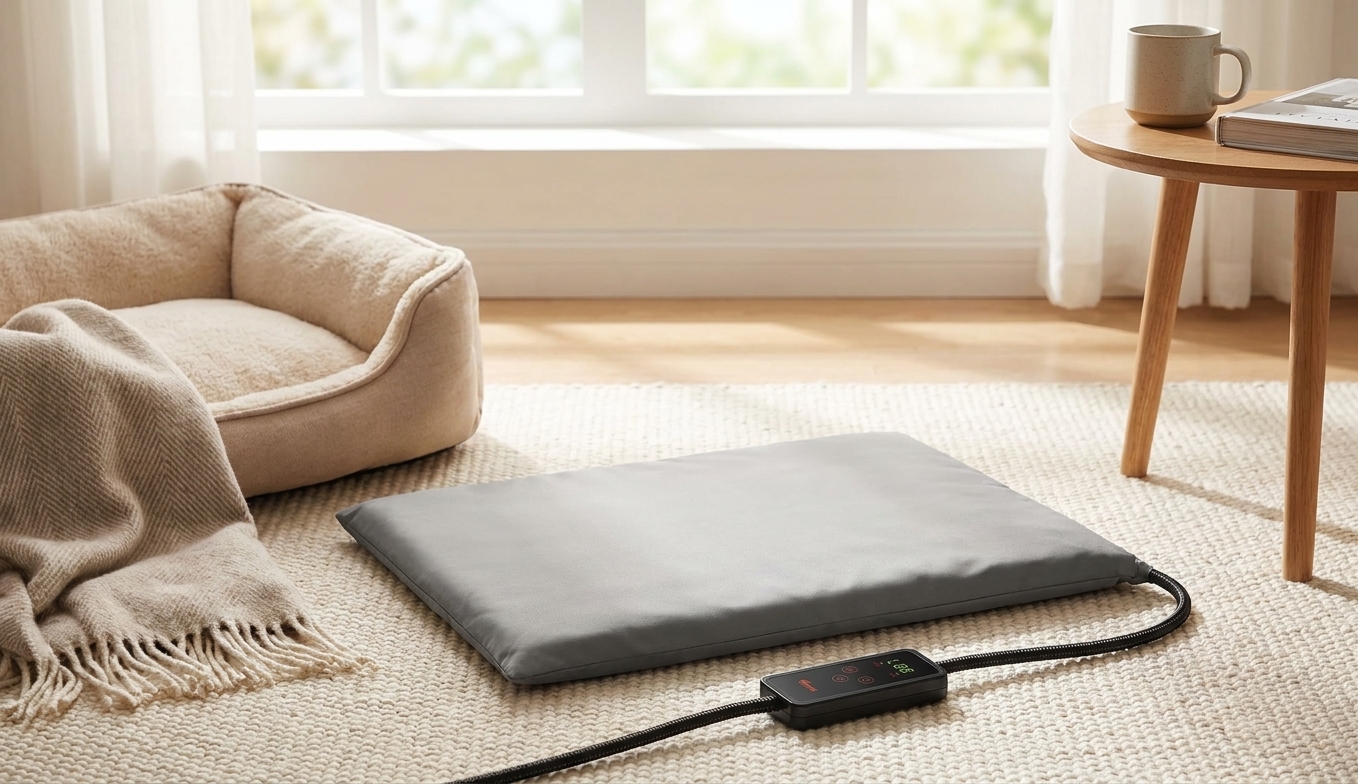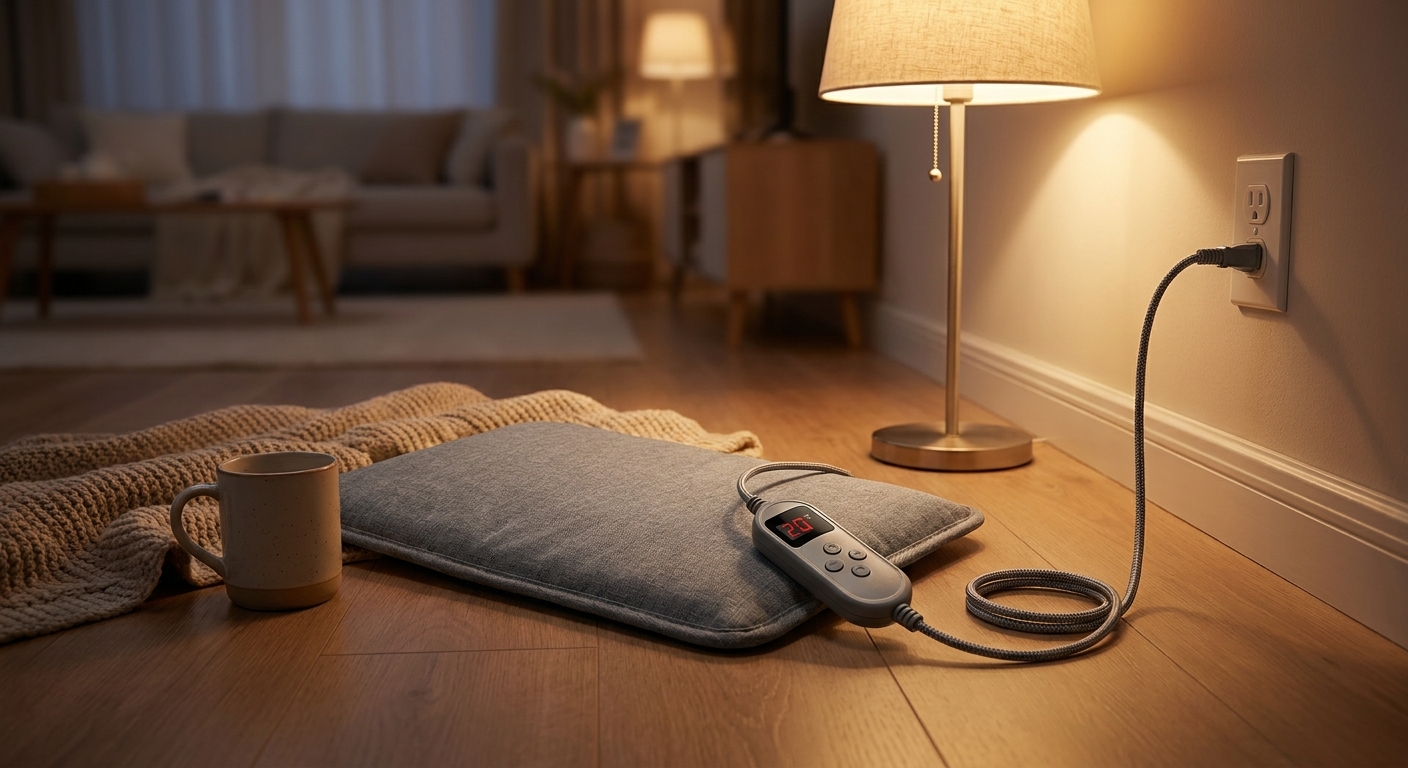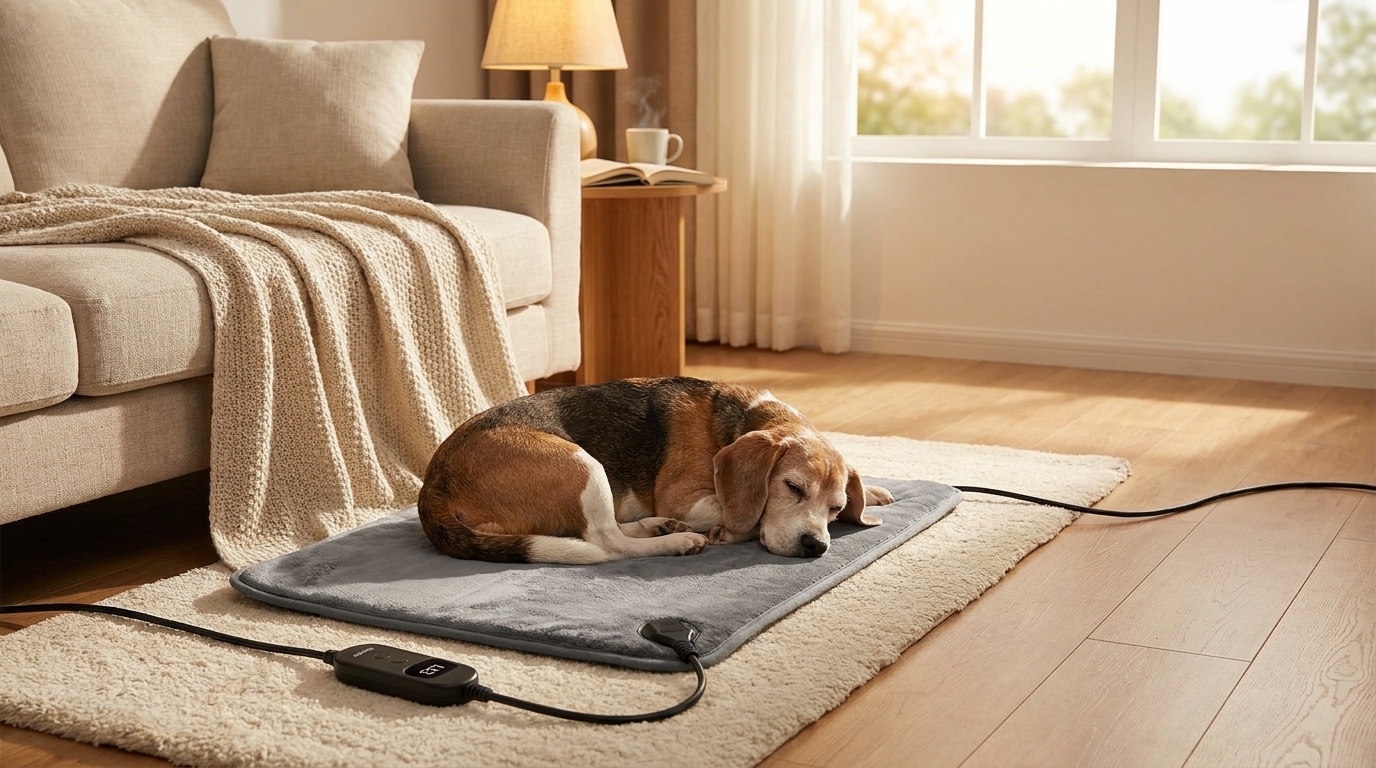
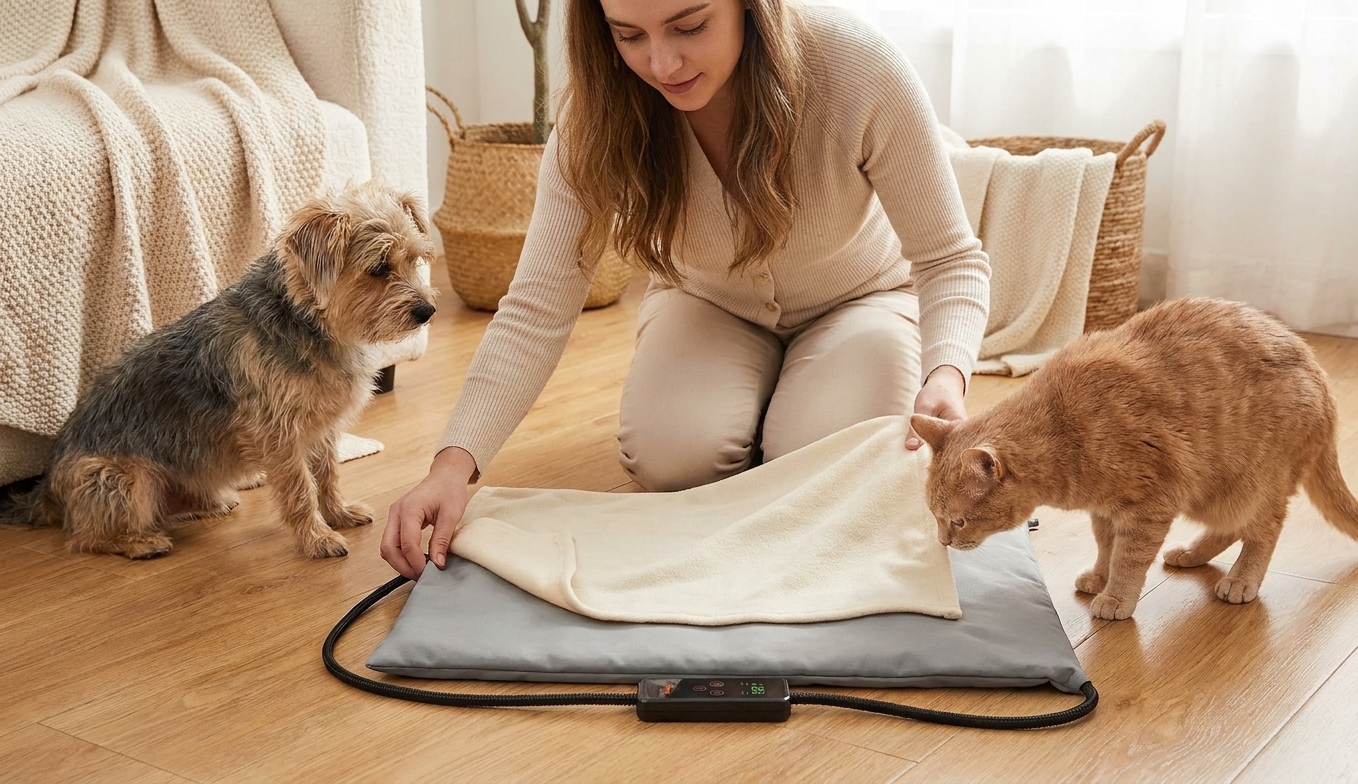
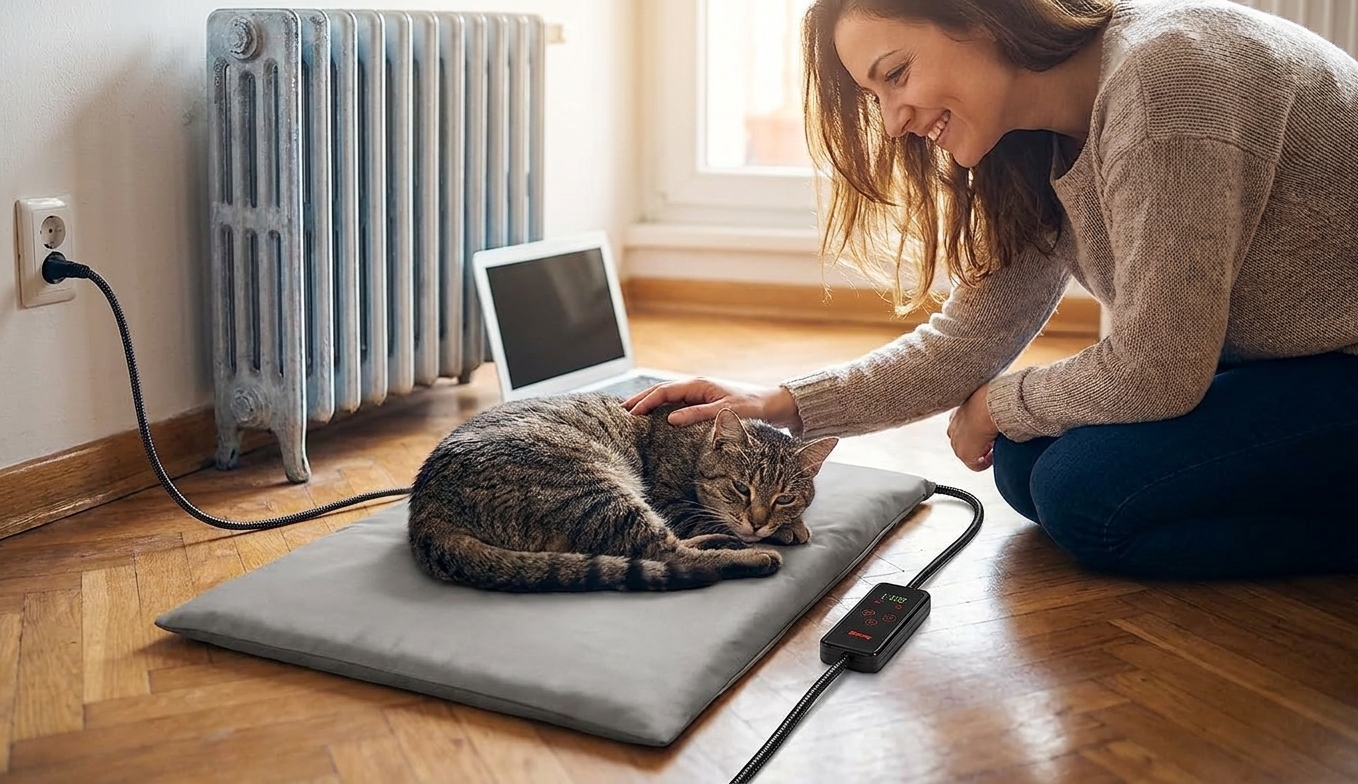
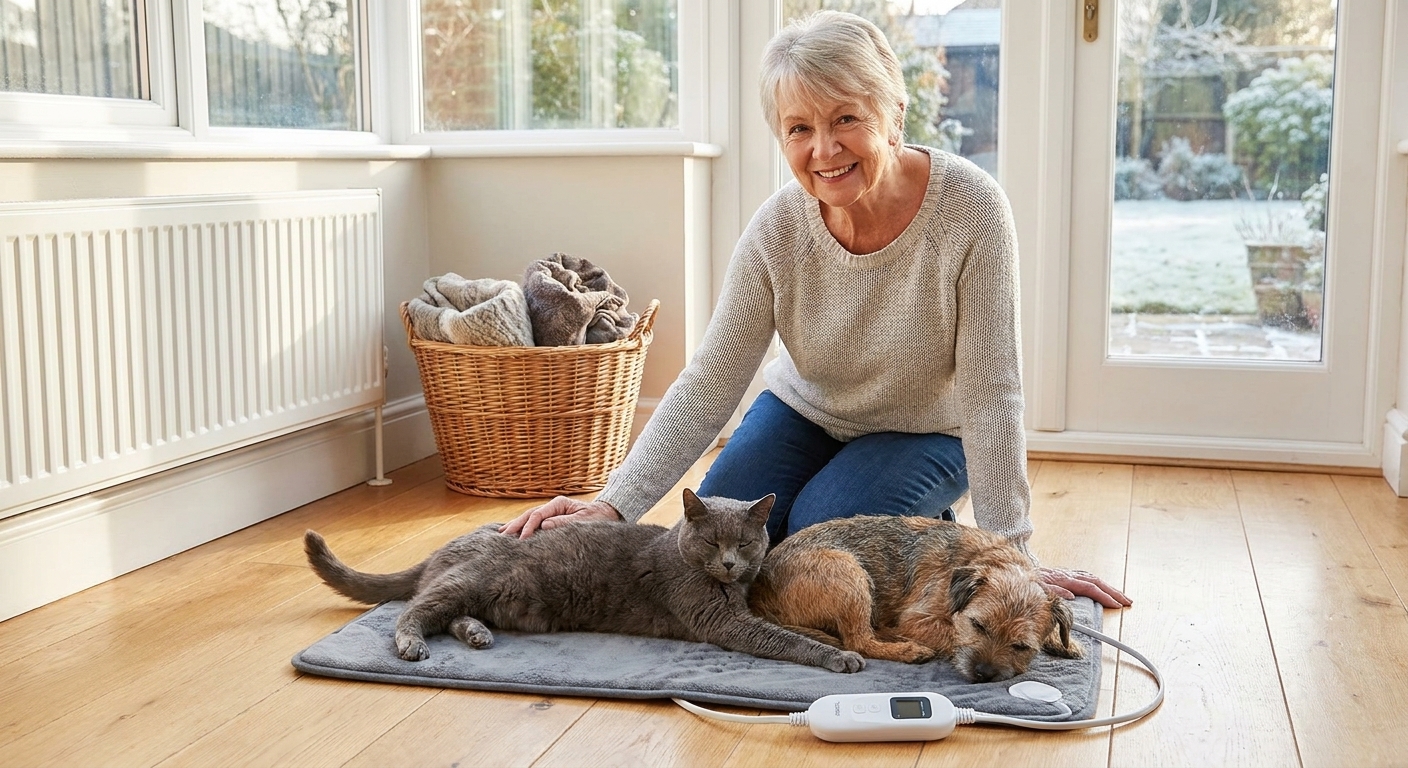

Here's the number that explains everything: your dog or cat runs 101–102.5°F — several degrees warmer than your 98.6°F. That's why Nook™ offers six surface settings from 86°F to 131°F instead of one blast of heat. As one reviewer put it, "it's made for pets and so emanates heat a little differently" — a lower setting sitting near your own skin temperature feels barely warm to your palm, yet genuinely warm to a pet pressed against it. That's the pet Nook™ serves best: an older animal with stiff joints who wants steady, gentle warmth on cold nights. And the 131°F ceiling is deliberate, not a shortcoming: a slow-moving senior can't always shift off a too-hot surface, so the internal sensor cuts power at that line — and because no careful owner should trust a single component with their pet's safety, the shut-off timer ends every cycle regardless. On the cheapest generic pads, neither safeguard exists.
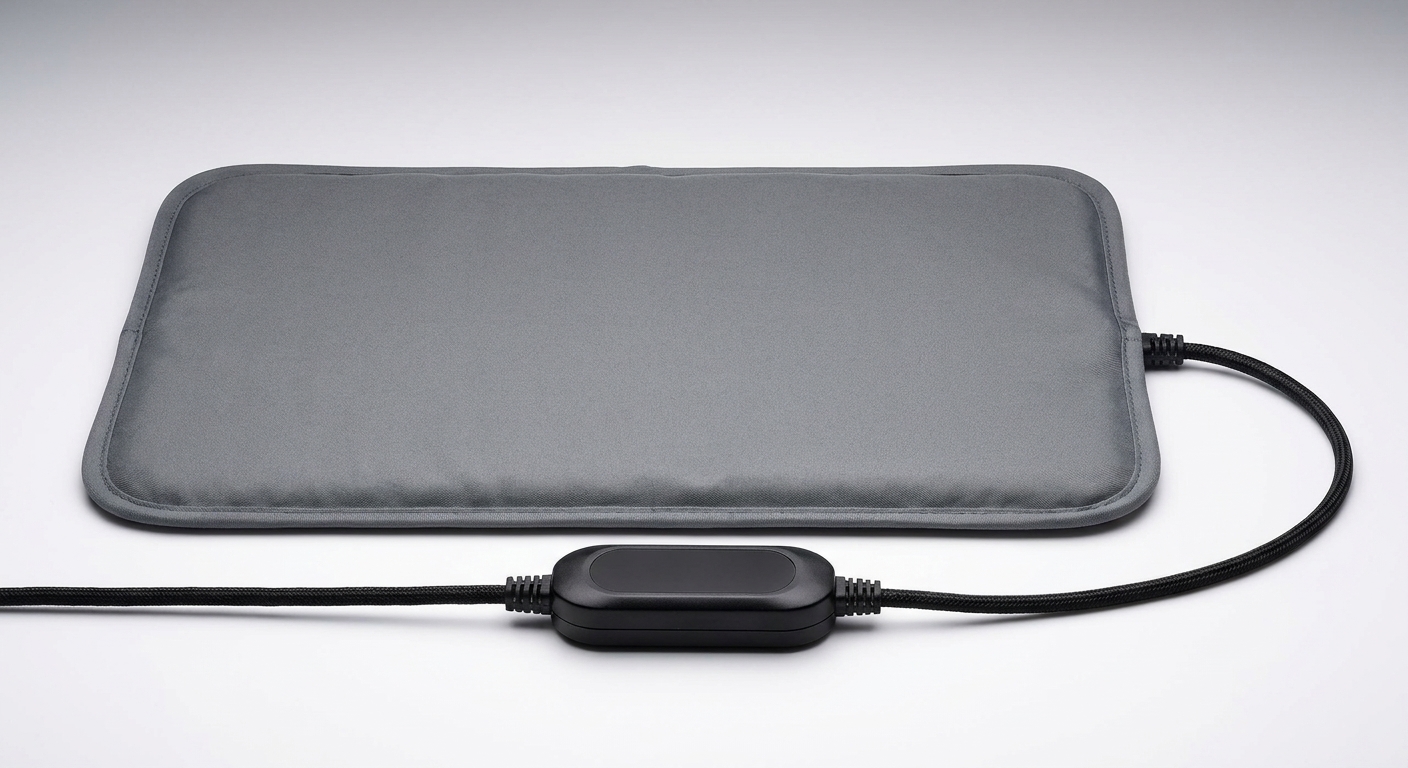
About the phrase "UL-certified heating wire": let's be exact, because exact matters. The heating wire — the component that actually generates heat — is what carries UL certification. The assembled pad is not a UL-listed end product, and we won't blur that line the way looser listings do; we'd rather you know precisely what's certified than trust a vague badge. Around that certified wire sit seven named safeguards — count them: (1) the internal temperature sensor, (2) the automatic power cut-off at 131°F, (3) the auto shut-off timer, adjustable from 4 to 24 hours, (4) a waterproof envelope, (5) a flame-retardant casing, (6) an inner chew-resistant cord sheath, and (7) a second, outer chew-resistant cord sheath. They're layered on purpose: no single sensor should be the only thing between an electric pad and a sleeping pet, which is why the timer powers the pad down at the end of every cycle no matter what. And you need zero special equipment to verify the safeguard that matters most overnight: the day yours arrives, set the timer and watch it count down and shut itself off. If you happen to own an infrared thermometer, you can go one step further — set the top level, let it warm fully, and confirm the surface holds at or below 131°F. One reviewer effectively ran that check for us, reporting "six different temperature settings, ranging from 86°F to 131°F." If anything you observe doesn't match what's printed here, your 90-day money-back guarantee applies in full.